
Multi-chain assets
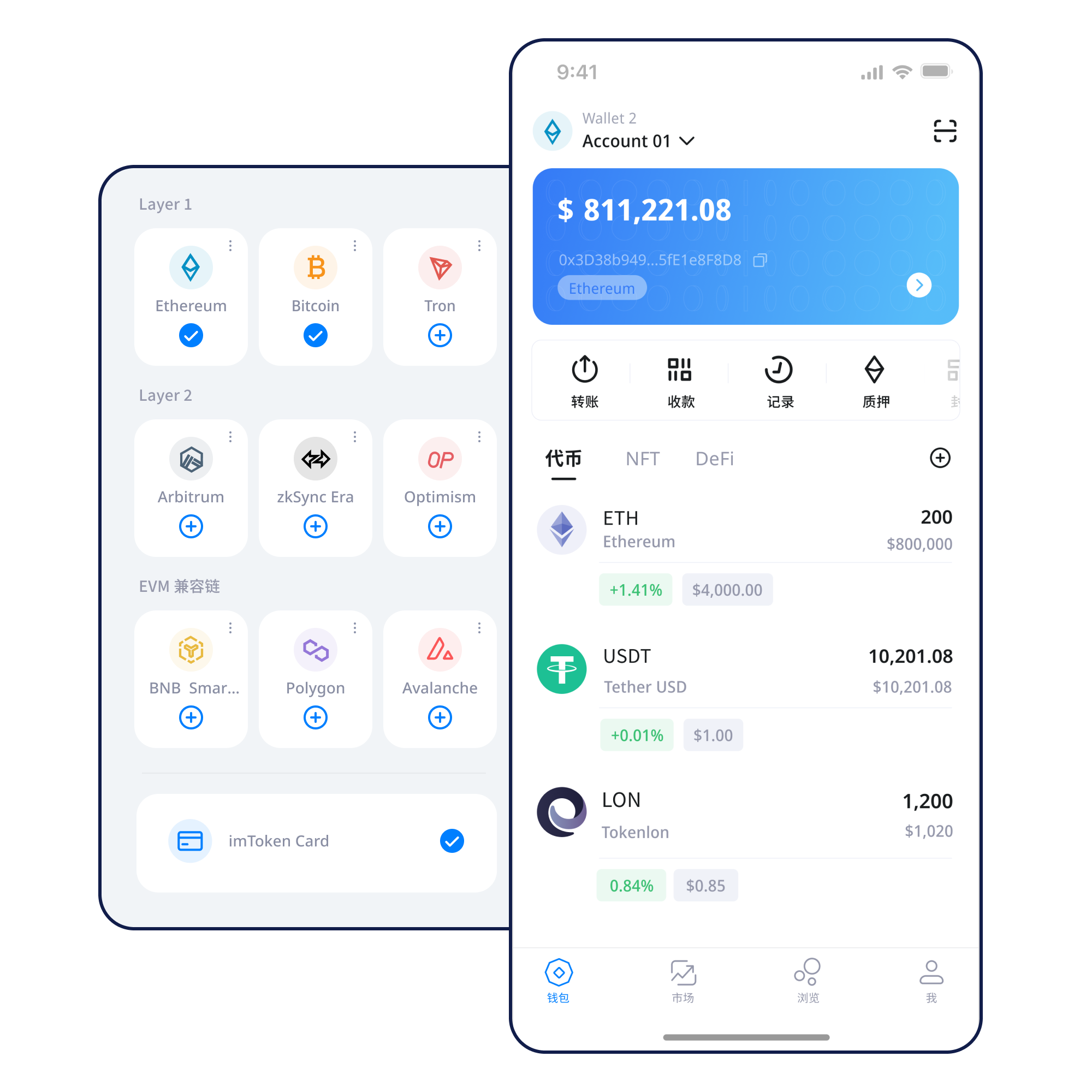
Know which network holds the asset, then verify the address and confirmation state.
Organize multi-chain assets, choose the correct network, send and receive with verifiable transaction details, connect to DApps, review approvals and build a stronger understanding of wallet security.
Verify the domain, then review every signature and approval separately.
Open guide →A wallet is most useful when assets, networks, transaction details and security checks are understood together.
Know which network holds the asset, then verify the address and confirmation state.
Review the receiving address, selected network, amount, gas and transaction hash.
Mobile access to assets, networks, history and DApp connections.
Seed phrases and private keys belong under the user’s control. imtoken personnel will never request them.
Treat browser connections, signatures and approvals as separate decisions.
Network choice affects fees, confirmations, contracts and where an asset actually exists.
The same account can appear across networks, but balances and contracts remain network-specific.
Public chains record transactions through a shared consensus process that can be checked with an explorer.
Compatible networks can share account formats while using different gas markets and contracts.
Cross-layer transfers can involve bridges, separate confirmation rules and waiting periods.
Gas prices execution; confirmations show how the network has continued building on a transaction.
Build a repeatable process rather than relying on memory at the moment of signing.
Use the official download entry and review the environment before installing.
Understand what credentials control the account.
Keep the seed phrase offline and never send it to anyone.
Match the asset, destination and selected network.
Review address, amount, gas and confirmation details.
Verify hashes and remove permissions that are no longer needed.
A wallet connection does not mean every later signature or approval should be accepted.
Read the Web3 guide →Protect credentials offline, verify addresses and networks before transfers, inspect signing requests, and manage DApp permissions over time. No wallet can make third-party contracts risk-free, and on-chain transactions generally cannot be unilaterally reversed after confirmation.
Open Security Center →Start with addresses, seed phrases, private keys and networks; then learn gas, transaction hashes, DApps and token approvals. Understanding the terms before acting makes later troubleshooting and security checks much clearer.
Read the starter guide →How blocks and confirmations help verify state.
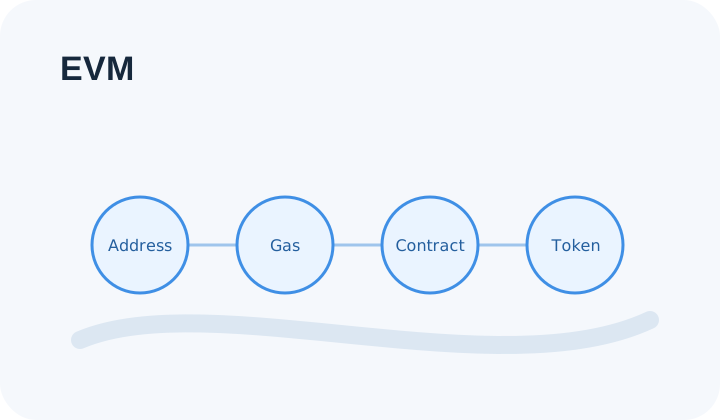
Addresses, gas, contracts and tokens in context.
Mainnet relationships, bridges and settlement.
Who can spend, how much, and for how long.
Practical routines for keys, devices and transfers.
Staking is participation in network consensus, not a guaranteed-return product.
Learn about PoS, validators, reward sources, network state, withdrawals and exit flows.
Learn the basics →Rewards can change; exits may involve waiting; validators may face penalties; smart contracts, market prices and third-party services can add risk.
Understand validators →Content-first notices without invented dates or promotional claims.
Use the network selector as a verification step rather than a cosmetic setting.
Support can troubleshoot with public transaction information; account-control credentials are never required.
When an interface and on-chain status differ, start with the network explorer.
Review long-lived permissions and remove those no longer needed.
A wallet manages account credentials and helps construct on-chain actions. Asset state is recorded on the relevant blockchain network; the interface reads that state rather than storing the assets inside a web page or app.
No. Seed phrases and private keys should remain under your control and should never be sent to anyone. imtoken personnel will not ask for them or for verification codes.
A private key controls a specific account, while a seed phrase is commonly used to derive one or more accounts. Both are highly sensitive credentials.
Similar address formats can exist on different networks. The asset network, recipient-supported network and the network selected in your wallet need to match.
Gas measures the network resources needed for on-chain execution. The resulting fee depends on network rules, transaction complexity and congestion rather than being a fixed wallet service charge.
A transaction hash is a key reference for checking broadcast, inclusion, confirmations and execution results on the correct block explorer.
First verify the correct network and account, then compare the token contract and explorer balance. An interface display issue should be separated from the actual on-chain state.
Download through the official entry, then keep network and security checks part of every action.